Blog
How to Keep Your Kid's Birthday Gifts a Surprise (And Avoid the Dreaded Duplicate Lego Set)
Coordinating gifts for a child's birthday party can feel like navigating a minefield of duplicate toys and spoiled surprises. Here's how to keep the magic alive — for the kids and the parents.
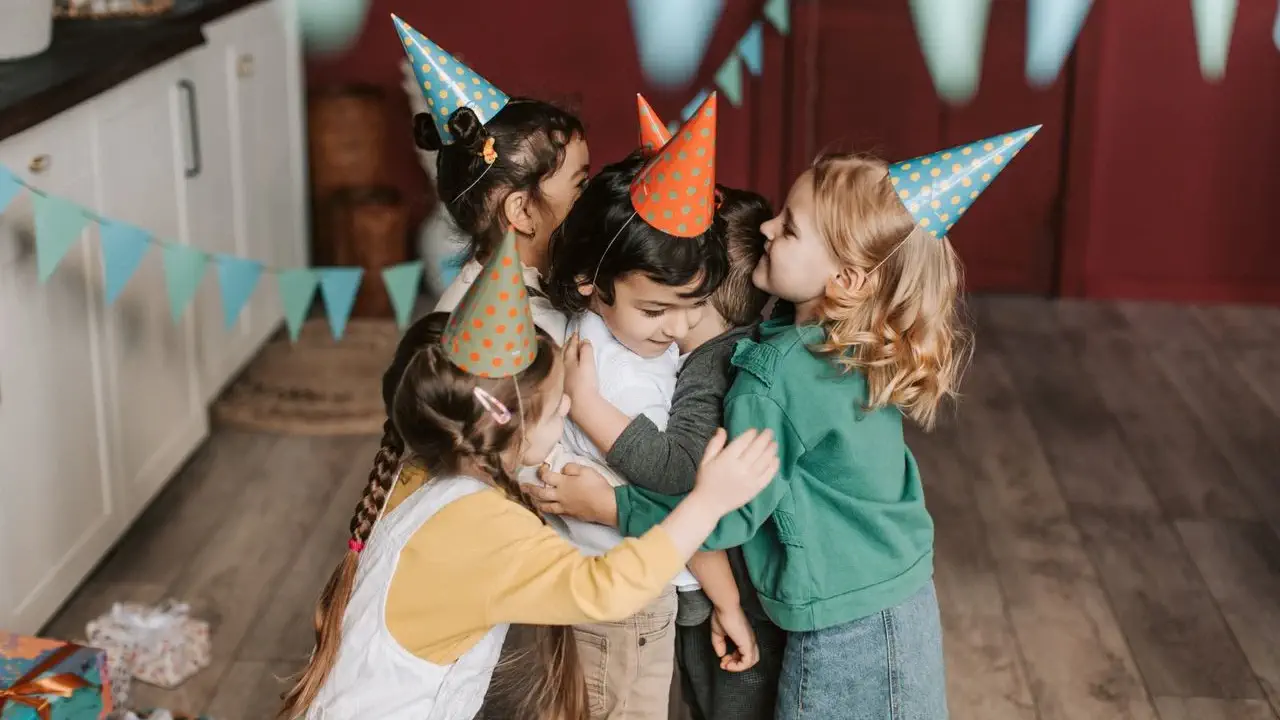
The birthday boy sat cross-legged in a sea of torn wrapping paper, his cheeks flushed with the chaotic joy that only a six-year-old can muster. Piles of presents surrounded him: brightly colored boxes, lumpy gift bags, a few oddly shaped packages that screamed “I was wrapped by a loving grandparent.” The adults hovered nearby, sipping coffee and making small talk. It was one of those picture-perfect Saturday morning parties, the kind you see in parenting magazines.
And then it happened.
Two identical boxes, unwrapped within minutes of each other. Both contained the same dinosaur fossil excavation kit — the one with the little chisel and the plaster block that dissolves into a cloud of dust all over the dining room table. The first one elicited a delighted gasp. The second one produced a confused, furrowed brow. “I already have this one,” the boy said, holding up the duplicate. His voice wasn’t ungrateful, just bewildered. He looked at his mom, then at the second giver, clearly not understanding how this had happened. The second giver — a well-meaning aunt who’d driven three hours — smiled tightly and muttered something about saving the receipt.
I watched this unfold from the edge of the room, feeling a familiar pang of recognition. I’d been the duplicate-gift giver before. I’d been the parent whose kid didn’t know how to react. I’d been the party guest who silently vowed to do better next time. And I’d been the one, a year later, who implemented a system that made duplicate gifts a thing of the past. That system — a hidden-reservation wishlist that lets guests coordinate without the birthday child ever knowing — transformed our family’s birthday parties from gift-anxiety minefields into genuinely joyful celebrations. Let me tell you how.
Why Kids’ Birthdays Are a Coordination Nightmare
Kids’ birthday parties are a unique beast when it comes to gifts. Unlike adult celebrations, where guests might default to wine or a gift card, children’s gifts are intensely specific. A six-year-old wants the exact Lego Ninjago set, not a generic building block kit. An eight-year-old has strong opinions about which Pokémon cards are acceptable. A ten-year-old’s entire social standing might hinge on whether they receive the right video game. The specificity is high, the tolerance for “close enough” is low, and the number of guests — often a dozen or more — magnifies the risk of duplication.
Add to that the fact that most party invitations are sent through school backpacks or digital platforms with no built-in gift coordination, and you have a recipe for chaos. Parents text each other: “What are you getting for Liam?” but the chain splinters. Someone’s message gets missed. Another parent shops last-minute and grabs whatever’s left on the Target shelf. The birthday kid, who’s been talking about the one thing they want for weeks, ends up with three knockoff versions and none of the real deal.
And then there’s the surprise factor. Kids, especially younger ones, still believe in a kind of birthday magic. They don’t know what’s inside the wrapped boxes. They don’t want to know. The anticipation — the shaking of the package, the guessing game, the “what could it be?” — is half the thrill. When a gift gets spoiled because a parent accidentally mentions it in front of them, or because they see a duplicate and realize something’s off, that magic deflates. It’s not just about the stuff. It’s about the feeling.
The Day My Niece Opened Three Identical Art Kits
Let me tell you a story that still makes me wince. My niece, Maya, turned seven last year. She’s a fiercely creative kid — the kind who covers her bedroom walls with watercolor paintings and makes stop-motion videos with clay figures. For her birthday, my sister-in-law sent out invitations to Maya’s entire class, plus some family friends. Twenty-three kids. Twenty-three gifts. My sister-in-law mentioned in passing that Maya was “really into art supplies right now.” She didn’t specify brands, types, or that Maya already owned a very specific, high-quality watercolor set she’d received from her grandmother. She just said, “She loves art.”
Can you see where this is going?
Three separate guests — two school friends and a neighbor — bought variations of the same kid’s art kit: the kind with markers, colored pencils, crayons, and a handful of chalky pastels in a bright plastic carrying case. Maya opened the first one and squealed with delight. “This is exactly what I wanted!” she said, hugging the case. The second kit appeared a few presents later. She looked a little puzzled, but being a polite kid, she said “Thank you, I can always use more art supplies.” By the time the third kit emerged, Maya’s composure cracked. Her smile wobbled. She looked at her mom with a silent, pleading expression that said, “Why is this happening?” My sister-in-law jumped in with a cheerful, “Wow, you’re going to be the best-stocked artist in the whole school!” but the damage was done. Maya wasn’t upset about the gifts themselves. She was upset because the whole thing felt weird. The magic of unexpected surprises had been replaced by a creeping sense of, “Oh, this again.”
After the party, my sister-in-law and I sat on her porch while Maya played inside with her single favorite gift — ironically, a set of sculpting clay from a family friend who’d actually called ahead to ask what Maya needed. “I don’t know how to fix this,” she said. “I can’t exactly vet every single gift in advance. But I hate seeing her disappointed. And honestly, I feel bad for the guests who wasted their money.”
That conversation sparked a project. We decided that for Maya’s next birthday, we’d try something different. Something that would let guests coordinate without Maya ever seeing a thing. And that’s when the hidden-reservation wishlist entered our lives.
Enter the Hidden-Reservation Wishlist
Here’s the concept, in case you’re new to this idea (and if you’ve read my other posts, you’ll recognize the theme). A hidden-reservation wishlist works like this: the gift recipient — or their parent, in the case of a young child — creates a list of desired items. They share the list with party guests. The guests can view the list, see which items have already been claimed by other guests, and reserve items for themselves. The twist? The recipient can’t see any of the reservation activity. When they look at their own list, they see a clean collection of items they’d love. No “claimed” tags. No names. No hints about what might be wrapped up in the pile of presents on the big day.
This flips the traditional registry model on its head. Most registries are designed for transparency: the list owner can see every purchase, every contribution, every note. That’s great for a wedding couple managing thank-you cards. It’s a disaster for a kid who still believes in birthday magic. The hidden-reservation approach preserves the practical benefit of coordination (no duplicates) while protecting the emotional benefit of surprise (pure, unspoiled anticipation).
For Maya’s next birthday, we used Giftly Lists to set up a hidden-reservation wishlist. My sister-in-law helped Maya pick about twenty items — a specific sculpting clay set she didn’t already own, some high-quality brushes, a children’s book about famous artists, a gift card to the local art store, and a few whimsical things like a unicorn-shaped paint palette. She included direct links to exact products for the guests who wanted clarity, and descriptive notes for those who preferred to shop around. Then she shared the link in the digital party invitation.
The result? Zero duplicates. Maya opened gift after gift, each one a genuine surprise. She didn’t know that Aunt Carol had claimed the brushes, or that her best friend’s mom had reserved the clay set. She just knew that every present felt hand-picked and new. The joy on her face was unmistakable — and entirely unforced.
How to Set Up a Kids’ Birthday Wishlist That Actually Works
Creating a wishlist for a child is a little different from creating one for an adult. Kids’ preferences are more fluid, more passionate, and often more brand-specific. Here are some tips for building a list that makes guests feel confident and makes the birthday kid feel seen.
Involve the child, but maintain control. For younger kids, you’ll do most of the curating. Ask them open-ended questions: “What are three things you really hope to get this year?” Guide them toward a mix of price points. For older kids, let them browse online with you and add items themselves, but give the list a final review to make sure it’s balanced and reasonable. A kid might add a $300 gaming console; you can keep it on the list as a “group gift” option, but make it clear that it’s a stretch item.
Be absurdly specific. “Art supplies” is not specific enough, as Maya’s earlier party demonstrated. “Caran d’Ache Neocolor II water-soluble wax pastels, set of 15” is specific. Include brand names, sizes, and even direct links when possible. This removes guesswork for guests and dramatically reduces the chance of well-meaning substitutions that miss the mark.
Offer a wide range of price points. Some parents have $15 budgets. Others have $50. A good list includes items from $5 to $150. That way, no one feels pressured, and everyone can find something that fits. The small items often create the biggest smiles — a favorite candy, a pack of stickers, a tiny toy that becomes the unexpected hit of the party.
Mix practical and whimsical. Yes, your child needs a new winter coat. Yes, they also want a remote-control tarantula. Put both on the list. The practical items help family members who want to give something useful. The whimsical items spark joy and are often the ones reserved first.
Update the list as RSVPs come in. If a few items get claimed quickly, add new ones so late responders still have choices. A living, breathing list feels generous and responsive, not like a limited-time offer that’s already sold out.
Integrating the List Into Your Party Planning
Sharing the wishlist is the easy part. The art is in how you frame it. You want guests to feel like they’re being offered a helpful tool, not a mandatory purchase order. Here’s the wording I’ve seen work best:
“Maya’s birthday is coming up, and we’ve put together a wishlist of things she’d genuinely love. The cool part: you can see what other guests are planning to give (so no one buys the same thing twice), but Maya can’t see any of that — so the surprises stay secret. Absolutely no pressure to use it, but if you’re looking for ideas, here’s the link.”
This framing does several things. It explains the hidden-reservation feature upfront, which intrigues people. It reassures guests that they’re not being corralled into a specific purchase. And it emphasizes the benefit — avoiding duplicates and preserving surprise — in a way that makes the list feel like a thoughtful gesture rather than a directive.
I also recommend including the link in the digital invitation itself, and perhaps mentioning it in the party reminder email a week before the event. The easier it is to access, the more people will use it. Giftly Lists, for example, lets anyone view and reserve from a shared link without creating an account or downloading the app. That’s a huge advantage when you’re inviting grandparents, neighbors, and the parents of your kid’s classmates — not all of whom are technically inclined or eager to download new software.
Handling Different Age Groups
The hidden-reservation approach works across ages, but the execution shifts slightly depending on the child’s maturity.
For toddlers and preschoolers (ages 1-4): The child is too young to participate in list creation, so parents handle everything. These lists tend to be heavy on practical items — clothes, developmental toys, books — with a few fun splurges. The surprise is for the parents as much as the child. There’s something lovely about opening a gift at a toddler’s party and genuinely not knowing what’s inside, even though you made the list.
For elementary school kids (ages 5-10): This is the sweet spot. Kids are old enough to articulate what they want, young enough to still believe in the magic of surprise, and social enough that their party guest lists are often large. The hidden-reservation list shines here. It turns a chaotic, duplicate-prone free-for-all into a smooth, joyful experience.
For tweens and teens (ages 11+): The dynamic shifts. Older kids often want cash, gift cards, or very specific, expensive items. They might be more involved in managing their own list. The hidden-reservation model still works beautifully — it prevents the awkwardness of two friends bringing the same hoodie or video game — but you might need to explain the system more to the kid, who might be curious why they can’t see who’s claimed what. Frame it as “keeping the surprise alive” and they usually buy in. Teens still love surprises, even if they pretend not to.
The Ripple Effect on Gift Etiquette
One unexpected benefit of using a hidden-reservation wishlist is how it shifts the social dynamics of the party. Without a list, parents often feel anxious about their gift choices. They second-guess. They overspend to compensate for uncertainty. They text the host at the last minute, adding to the host’s mental load. With a list, all of that anxiety melts away. The guest can confidently choose an item, knowing it’s something the child actually wants and that nobody else will bring. The host can relax, knowing the coordination is handled. And the child gets a curated set of gifts that feel personal and surprising.
It’s also worth noting that the list can serve as a gentle boundary-setter. If you have a relative who always buys overly extravagant gifts, the list can steer them toward something meaningful but not overwhelming. If you have a friend who tends to grab a random toy from the drugstore aisle, the list gives them an easy, affordable alternative that will actually get played with. It’s not about controlling people’s generosity. It’s about channeling it in a way that maximizes joy.
What Happened at Maya’s Next Party
I want to close the loop on Maya’s story, because the contrast between her two birthdays is what convinced me that hidden-reservation wishlists aren’t just a nice idea — they’re a transformative one.
Maya’s eighth birthday party was held in the same backyard as the year before, with many of the same guests. The same aunt who’d driven three hours with a duplicate art kit. The same neighbor who’d brought the third identical set. The same classmates. Everything was familiar, except for one thing: the wishlist.
As Maya opened her gifts, her expressions told the whole story. Each present was a genuine surprise. The sculpting clay from her best friend? A delighted gasp. The professional brush set from her grandmother? A wide-eyed, “These are the ones I wanted!” The silly unicorn paint palette from her dad? A burst of giggles. There were no furrowed brows, no wobbly smiles, no silent pleas for rescue. Just pure, uninterrupted joy.
After the party, my sister-in-law pulled me aside. “I can’t believe how different that felt,” she said. “I actually enjoyed the party. I wasn’t bracing for duplicate gifts or awkward moments. I just watched her be happy.” Then she added something that I’ve thought about many times since: “I feel like I gave her the gift of surprise. And that’s not something you can wrap.”
She was right. The toys and art supplies would eventually be used up, outgrown, or forgotten. But the feeling of being genuinely surprised — of not knowing what’s inside the box, of being delighted by the thoughtfulness of people who coordinated quietly behind the scenes — that’s a gift that sticks. It becomes part of the memory of the day, woven into the fabric of childhood.
And that, I think, is the entire point. Not just avoiding duplicates, not just streamlining the logistics. The point is protecting the magic. For kids, for parents, for everyone who still believes that a birthday should feel like a mystery worth unwrapping.
Ready to make your child’s next birthday party a duplicate-free, surprise-filled celebration? Giftly Lists lets you create a wishlist where guests can reserve items — but the birthday kid can’t see a thing. Free on iOS for up to 3 lists. Download on the App Store and give the gift of genuine surprise this year.