Blog
Is Regifting Rude? A Honest Guide to Regifting Without the Guilt
Regifting gets a bad reputation, but done thoughtfully it's practical, sustainable, and sometimes kinder than keeping something you'll never use. Here's how to do it right — and how to avoid ever needing to.
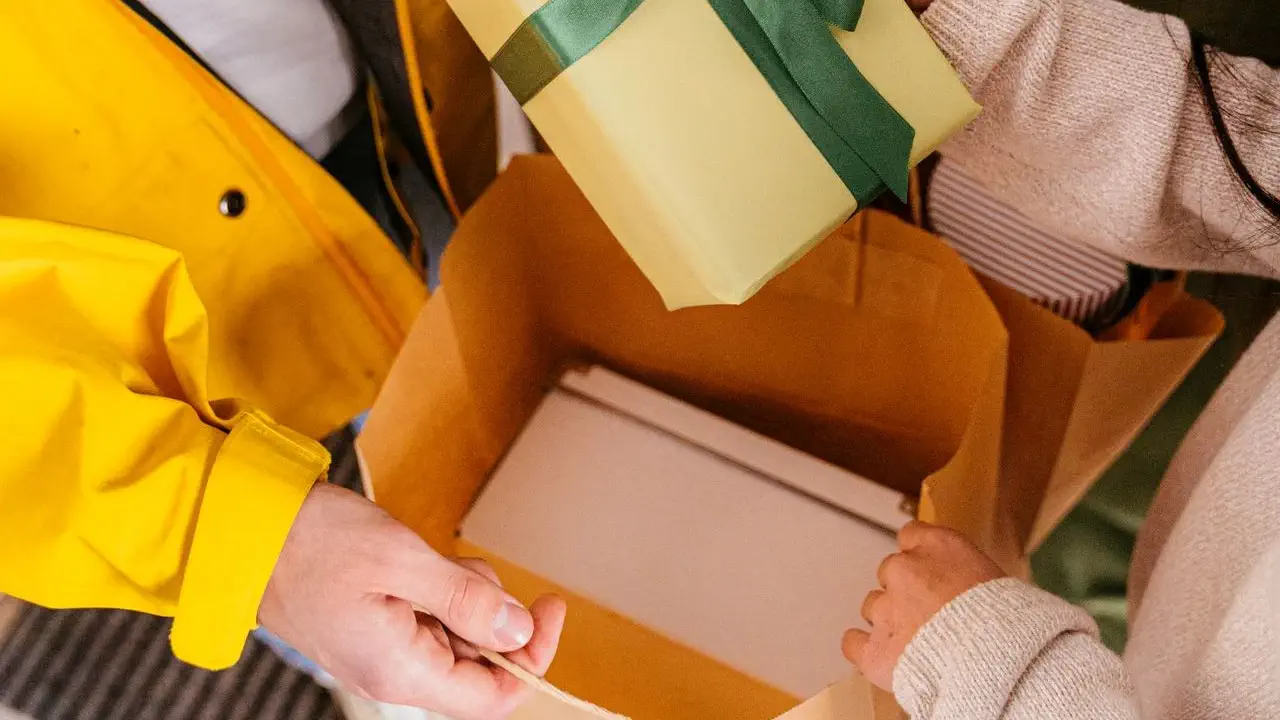
I once regifted a candle and got caught. Not by the person who gave it to me. By the person I gave it to, who happened to be at the party where I received it three months earlier. She didn’t say anything in the moment. She just looked at the candle, then looked at me, then looked back at the candle with an expression that said, “I have seen this exact object before.” I played it cool. She played it cooler. We never spoke of it again. But I still think about that candle.
That experience sent me down a rabbit hole I wasn’t expecting. I started asking people what they actually thought about regifting, and the answers were all over the map. Some people considered it a cardinal sin. Others did it constantly and thought nothing of it. A few had elaborate systems for tracking which gift came from whom, so they’d know whether it was safe to pass along. My friend Marcus told me he keeps a spreadsheet. My aunt told me she’s been regifting the same fruitcake for eleven years and considers it a family tradition.
What I eventually concluded is that regifting is neither inherently rude nor inherently fine. It depends entirely on how you do it, who you’re doing it to, and whether the gift actually fits. Get those three things right, and regifting is a small, sensible act of resourcefulness. Get them wrong, and you end up like me, holding a candle and pretending not to recognize it.
So let me lay out what I’ve learned. The etiquette, the ethics, the practical rules, and the bigger question — how do we reduce how often regifting feels necessary in the first place? Because the root of the regifting problem isn’t really about regifting at all. It’s about receiving gifts that don’t fit, and feeling stuck with them.
Why Regifting Has Such a Bad Reputation
The word itself carries baggage. “Regifting” sounds like a minor transgression, even though the act — passing along something you won’t use to someone who will — is arguably more environmentally and financially responsible than letting it collect dust.
Part of the stigma comes from a genuine fear: the fear of being caught. If the original giver sees their gift on someone else’s shelf, or hears that you gave it away, the message they receive is “you didn’t like what I chose.” That’s the real wound. It’s not that you gave a gift away. It’s that the original giver’s effort felt unvalued.
Part of it comes from a cultural ideal that says every gift should be chosen specifically for the recipient. That ideal is lovely in theory but impossible to sustain in practice. Nobody bats a thousand. At some point, everyone receives something that doesn’t fit — the wrong size, the wrong scent, a book they’ve already read, a hobby they’ve never pursued. What you do with that item afterward is a matter of pragmatism, not morality.
And part of the stigma comes from the fact that regifting is often done badly. It’s done lazily, without thought, with the original tag still on or a card addressed to someone else tucked inside. That’s the version of regifting that gives the practice a bad name. It’s not the practice that’s the problem. It’s the carelessness.
The good news is that regifting, done thoughtfully, is fine — and the even better news is that with a little coordination, you rarely need to do it at all. Which is where hidden reservations come in.
The Five Rules of Ethical Regifting
If you’re going to regift, here’s how to do it in a way that respects everyone involved.
Rule one: only regift things that are genuinely good. The first test is simple. Would you be happy to receive this item? If the answer is no, don’t pass it along. Regifting isn’t a way to offload junk. It’s a way to pass along something of value to someone who’ll genuinely appreciate it.
Rule two: never regift in the same social circle. This is the most important rule, and the one I violated with the candle. If Aunt Carol gave you the item, and Aunt Carol will be at the birthday party where you’re planning to regift it, don’t. Keep gifts moving outside the original circle. Give the candle to a friend-of-a-friend. Give it to a nonprofit raffle. Give it to your neighborhood white elephant. Just don’t give it back into the network where it originated.
Rule three: make sure it’s actually appropriate for the new recipient. A regift should feel thoughtful, not generic. If you’re giving a hand-stitched quilt to someone who just moved into a minimalist apartment, you’ve done a lazy regift. If you’re giving it to a friend who’s been hunting for exactly that style, you’ve done a good one.
Rule four: keep the original packaging clean and complete. No folded cards with the original recipient’s name still inside. No price tags. No used-gift evidence. The item should feel new to the recipient, because in every way that matters, it is.
Rule five: don’t lie if you’re caught. If the original giver somehow finds out, own it. “You gave me something beautiful, and I realized it would be perfect for [name], who’s been looking for one. I hope that’s okay.” Most people will be fine with it. The lie is what stings, not the regift.
A Personal Story: The Year I Stopped Regifting Entirely
A few years ago, after the candle incident, I decided to stop regifting altogether. Not because I thought it was wrong, but because I realized I was doing it reactively — getting gifts I didn’t want, feeling awkward, and quietly passing them along. The whole cycle felt dishonest, and I wanted to fix the underlying problem, not just manage its symptoms.
What I started doing instead was much more effective. I started building a wishlist and sharing it. Not a demanding, exhaustive, “here’s everything I’ve ever wanted” list. Just a small, well-curated list of things I’d genuinely use and love. I shared it with my family and close friends, framed as a helpful tool rather than a request. And I added a small note explaining the hidden-reservation setup, so nobody would worry about spoiling my own surprises.
The effect was immediate. The gifts I received started landing. My aunt, who has always been sweet but a bit generic in her gift choices, started giving me things I actually used. My brother, who used to default to gift cards, started picking specific items off the list. My mother-in-law, who once gave me three identical scarves over four years, shifted to items I’d actually requested.
And the regifting? It mostly stopped. Not because I made a moral decision to stop, but because I didn’t need to anymore. When gifts fit, there’s nothing to regift.
That’s the underlying insight, and it’s the reason I now think about regifting as a symptom rather than a problem. Regifting happens when the coordination is broken. Fix the coordination, and the regifting takes care of itself.
If you want to read more about how to build and share a list people will actually use, I wrote a whole piece on what to put on a wishlist and another on how to share a wishlist without feeling greedy. Both cover the mechanics, and both argue that a good list is a gift to everyone.
What to Do With a Gift You Can’t Regift
Sometimes regifting isn’t an option. The gift is too personal to pass along, or it came from someone in your inner circle, or it’s an heirloom that would cause real hurt if it disappeared. In that case, here are some better options than stuffing it in a closet and forgetting about it.
Keep it, and use it for its intended purpose. Sometimes an object you didn’t want becomes useful once you find the right spot for it. The book you’ve already read can be passed to a friend who hasn’t. The blanket you didn’t ask for can live on the couch and be genuinely used.
Donate it. A local shelter, a charity shop, a school auction, a community center — there’s almost always a place where a gently-used item will find a good home. If the giver asks about it later, you can honestly say you passed it along to someone who needed it.
Repurpose it. The candle you don’t want can become a gift for someone who does. The mug you already have three of can hold pens on your desk. The picture frame you don’t love can hold a photo you do.
Ask the giver. This is a bigger move, and it only works if the relationship can handle it. “I love that you thought of me — I already have one of these, and I was wondering if you’d mind if I passed it along to [name], who would really use it.” Most people, if they’re being honest, would rather their gift go somewhere it’s used than sit in a closet.
What you should not do is let the item sit in a drawer for two years and then throw it away. That’s the worst outcome for everyone — the giver’s effort wasted, your space cluttered, and the object landfilled. If you’re not going to use it, get it moving.
The Better Question: How Do We Reduce Regifting Altogether?
I want to make a slightly counterintuitive argument. The regifting problem isn’t really about regifting. It’s about the gap between what people give and what people want.
That gap exists for three reasons.
People don’t know what you want. They’re guessing. And guessing produces misses. The fix is a clear, specific, well-curated wishlist. If you want to see how this works in practice, look at my piece on sharing a wishlist link with party guests — it walks through how to make a list that actually helps people.
People don’t coordinate with each other. So you get three versions of the same thing, or two gifts that complement each other badly, or a gift that duplicates what someone else is already giving. The fix is a hidden-reservation system — the same one I’ve written about for group gift coordination and holiday exchanges.
People default to safe, generic options. When they can’t figure out what to get, they reach for the same handful of gifts — a candle, a mug, a gift card, a scarf. None of these are bad in themselves. They’re just not tailored. A list of specific ideas gives people a better set of defaults.
Fix those three problems, and regifting becomes a rare exception rather than a routine. Which is better for everyone. Better for the giver, who knows their gift is actually being used. Better for the recipient, who isn’t stuck managing clutter. Better for the planet, because fewer unwanted items get produced in the first place. And better for your relationships, because honest communication about what you want is more respectful than silently accepting things you don’t.
A Note on Regifting at the Holidays
Holiday season is peak regifting season, and it’s worth a specific note. The dynamics are different because the volume is higher. You’re getting gifts from more people, in a shorter window, and some of them are coming from people you don’t see often.
A few specific tips for holiday regifting:
Track what came from whom. This is the spreadsheet approach my friend Marcus uses, and while it sounds extreme, it works. A simple note in your phone — “Aunt Carol: candle, December 2025” — is enough. That way, you know not to pass it along to someone in her circle.
Hold off on re-giving for at least a year. A gift given in December and regifted in the same December is more likely to be recognized. Give the item some time to move out of circulation.
Bundle cleverly. A regifted item paired with something new — a book, a note, a small addition — reads as a curated gift rather than a lazy pass-along.
Use the same wishlist system for holiday gifts. If everyone in your family shares their wishlist, the gifts will land better, and you’ll have less to regift in the first place. My post on why Christmas surprises start in July covers the timing, and how to keep gifts a surprise covers the coordination.
What to Do If You Think Someone Regifted Your Gift
Sooner or later, it happens. You spot your gift on someone else’s shelf. You notice it in a photo from a party you weren’t invited to. You hear through the grapevine that your hand-knit blanket is now at a thrift store. What do you do?
The honest answer is: probably nothing. The gift is theirs once given. What they do with it is their business, even if it stings. The only exception is if the relationship is close enough that the honest conversation would strengthen it rather than hurt it. Even then, tread gently. The conversation you’re having isn’t really about the object. It’s about feeling seen. If the person didn’t feel seen by your gift, the fix isn’t to demand they use it. It’s to get better information about what would actually land.
And if you want to reduce the odds of this happening at all, the same principle applies: build a list, share it, coordinate. That’s the whole game.
The Bottom Line
Regifting isn’t rude. Regifting badly — carelessly, thoughtlessly, in ways that hurt the original giver’s feelings — is rude. The distinction matters, because it means regifting has a right way and a wrong way, and the right way is genuinely fine.
But the bigger insight, and the one I keep coming back to, is that regifting is downstream of a bigger problem. If gifts fit, there’s nothing to regift. If gifts are coordinated, the issue evaporates. If people know what you want, they can give it. And the entire apparatus of gift-giving gets easier for everyone.
So here’s my advice. If you’re a chronic regifter, don’t stop regifting. Just reduce the number of regifts you need to do by building a wishlist and sharing it. And if you’re on the receiving end of a regift, remember that the original giver probably meant well, and the person passing it along is probably trying to be kind too.
The candle in the story at the top of this post eventually found a home. I gave it to a friend-of-a-friend, who genuinely loved it. She burned it down to the wick. I’m not sure if that redeems the whole episode. But it’s a small comfort.
Ready to receive gifts that actually fit — so there’s nothing to regift? Giftly Lists lets you build a wishlist your givers can coordinate through, with reservations hidden from you so every surprise stays intact. Free on iOS for up to 3 lists. Download on the App Store and end the regifting cycle for good.